

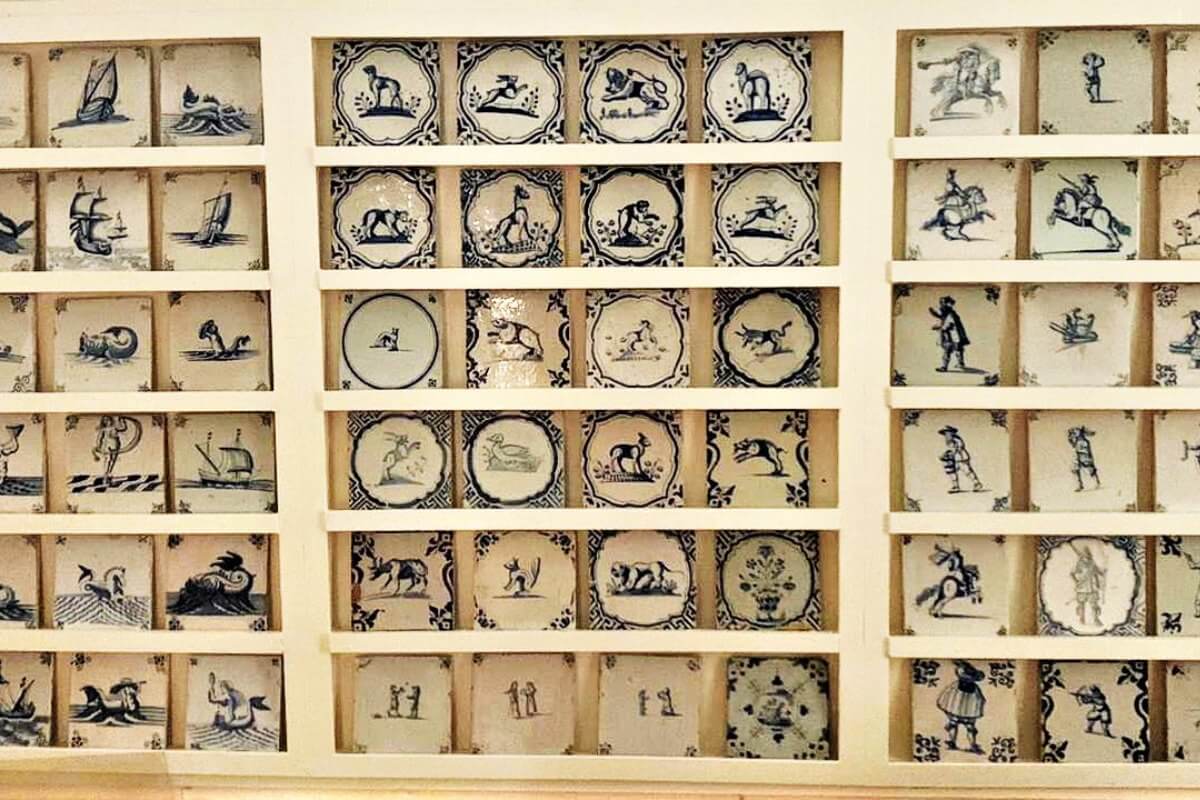
The history of Delft tiles – from international trade routes to global appreciation
From the Far East to the Netherlands: the origin of tile
The Delft tile is not an isolated invention, but the result of an international development that originated in the Far East. In China, ceramics had been produced for centuries at a level long unheard of in Europe. The combination of a light surface and refined painting made a deep impression on European merchants who came into contact with these objects through seafaring.
Through trade routes, these ceramics reached Europe, where they were studied and further developed, particularly in Italy. Italian workshops adopted the technique of a white, opaque glaze and developed it into what is known as majolica. This technique made it possible to apply detailed paintings to pottery, making ceramics no longer merely functional, but a carrier of image and story.
From Italy, this knowledge spread further north, where Antwerp grew into an important center of trade and craft in the 16th century. Here, international influences came together and techniques were further refined. Artisans worked with knowledge from different traditions and applied it within a local context.
When political and economic conditions in the Southern Netherlands changed, many craftsmen moved north. Via Zeeland, this knowledge reached Holland, where it developed further. In this transition lies the basis of the later Delft tile production, which would flourish in the 17th century.
The earliest tiles: from protection to decoration
The first tiles produced in the Netherlands had a distinct function. They were used to protect walls from moisture, heat and dirt, and were mainly found in kitchens, fireplaces and workrooms. These early tiles were thicker in shape and often featured simple decorations such as circles or squares.
Yet a development soon ensued in which the tile became more than a practical element. The white surface of the tin glaze offered possibilities for decoration. Where at first simplicity was central, there gradually came room for image and representation.
This transition from functional to decorative marks an important moment in the history of Delft tile. The tile became a carrier of image, and thus of meaning.
Delft as a center of craftsmanship and production
In the 17th century, Delft grew to become the most important center of tile production in the Netherlands. The city benefited from a strong economic position, a network of trade and a growing demand for refined interiors.
Within the potteries, a production process developed in which technique and craft came together. The clay was shaped, dried, coated with tin glaze and then painted. Then followed the firing process, during which the painting joined the surface permanently.
Although tiles were often produced in larger quantities, the handwork remained visible. Each tile was hand-painted, resulting in slight variations in line, composition and intensity. These subtle differences give antique Delft tiles their vibrancy and character.
Pottery and designers: structure within the making process
Different specialists worked together within the potteries. The production process was organized, but left room for individual execution. Designers played an important role in this.
Names such as Pieter Grauda and Adam Sijbel designed representations that were then executed by plate painters. They determined the composition, proportions and themes of the picture.
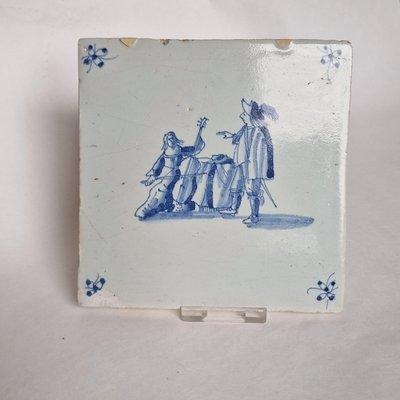
Pytr grauda
The painters who executed these designs worked with speed and precision. Within a small square area, they had to put down a complete representation. This required a mastery of line and brush that developed through experience and repetition.
The combination of design and execution ensured that Delft tiles became recognizable in their style while still allowing for variation.
Printmaking as a source: the influence of Adriaen Collaert
An important source of inspiration for the representations on Delft tiles was printmaking. In particular, the prints of Adriaen Collaert played a major role.
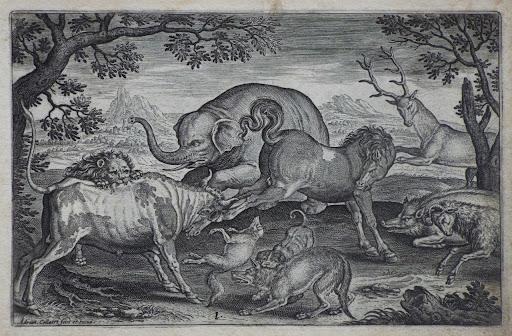
These prints brought together a world of animals, landscapes and fantasy. They provided a visual resource that was used and adapted by plate painters.
The translation from print to tile meant simplifying details and rebuilding compositions. The result was not an exact copy, but an interpretation that fit within the format and technique of the tile.
Mythical representations and Rotterdam sea creatures
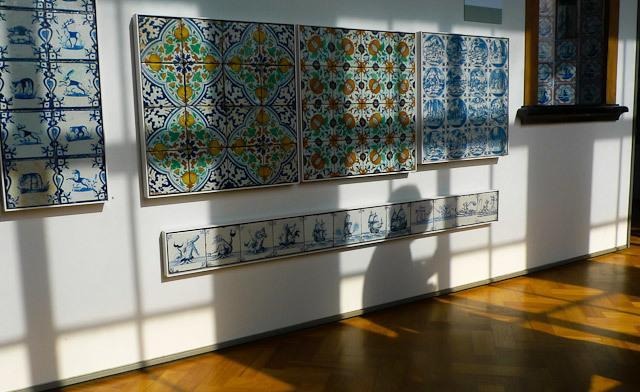
Within this translation also arose the well-known representations of sea creatures, often referred to as Rotterdam sea creatures. These motifs are partly among the most characteristic and beloved within Delft tile production.
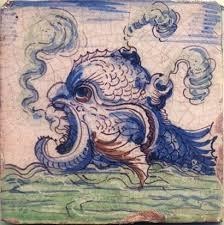
Sailors brought back stories of unknown animals and distant lands. These stories were translated by artists into images that stood between reality and imagination.
The sea creatures on Delft tiles are often composed of various elements. They show mythical representations and features of fish, birds and land animals, forming a visual expression of the unknown world imagined.
For collectors, these tiles represent a special part of the tile tradition, combining fantasy and history.
The Hoorn tulip: symbol of wealth and stock market trade
One of the most recognizable motifs within the Delft tile is the so-called Hoorn tulip. This concerns a double tile on which a tulip is centrally depicted.
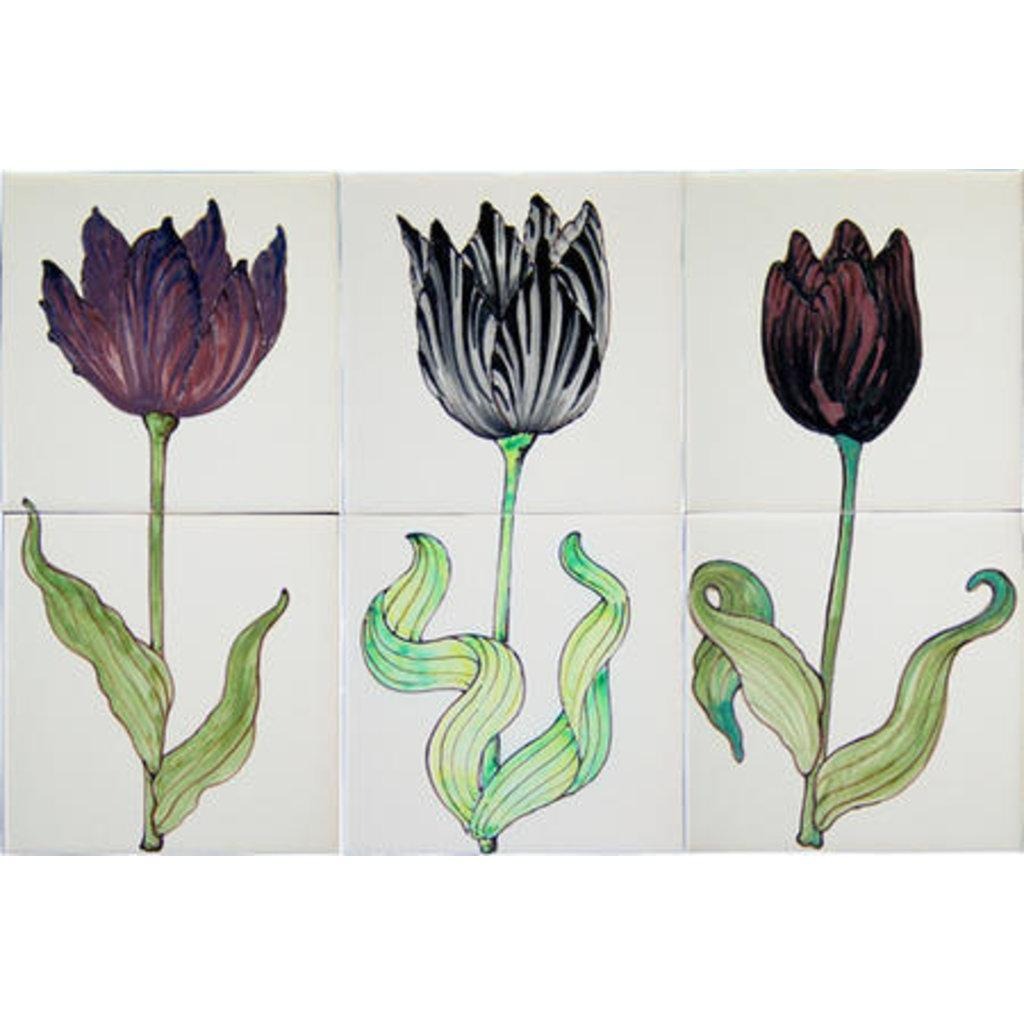
The tulip had special significance in the 17th century. During the period of tulip mania, tulip bulbs were traded at amounts comparable to the value of houses. The tulip thus became a symbol of wealth, trade and status.
Therefore, depicting a tulip on a tile was not an arbitrary choice. It was a visual reference to prosperity and economic power. These tiles were purchased by people who wanted to surround themselves with symbols of success and position.
Within interiors where commerce and possession were central, these tiles were an appropriate and recognizable addition.
Portrait tiles and personal representation
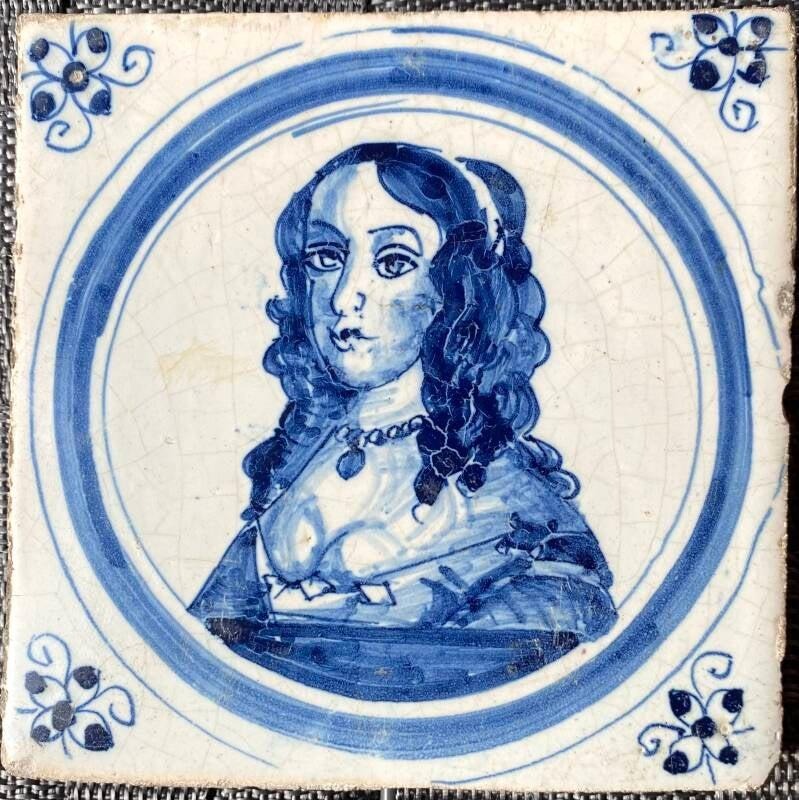
In addition to general motifs, tiles were also made on commission. Portrait tiles show specific individuals and give the tile a personal character.
These tiles show that the Delft tile was not only a product of serial production, but also offered room for individual expression. They were used to make identity visible and could be part of an interior in which representation played a role.
International distribution and famous locations
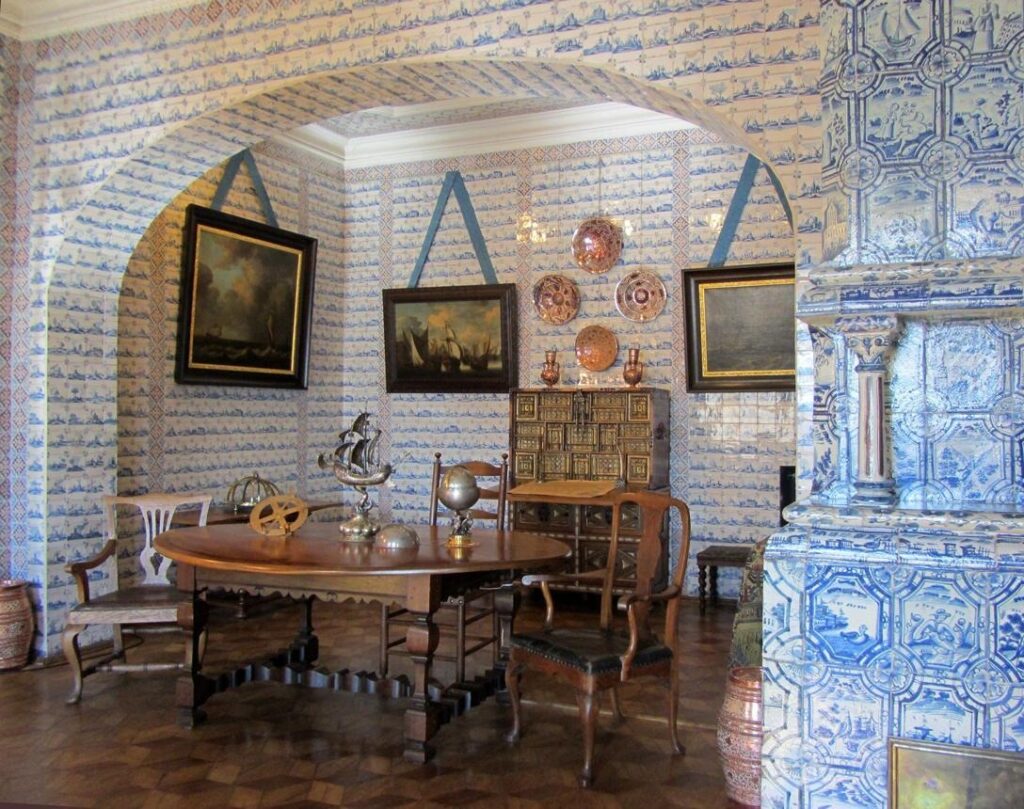
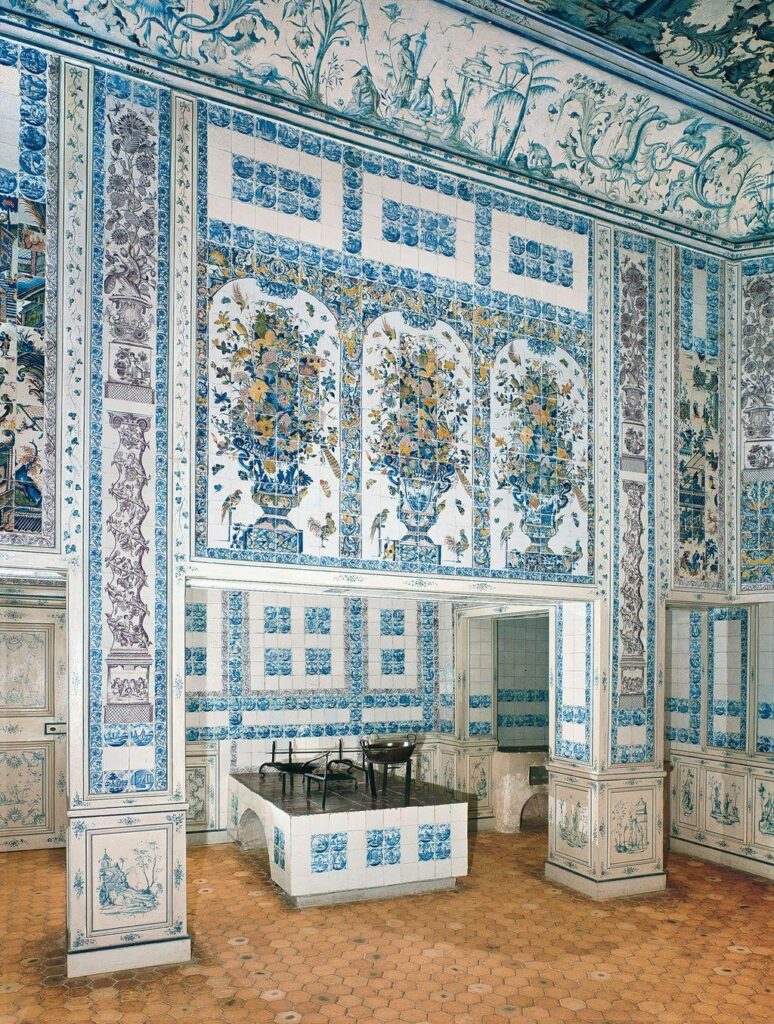
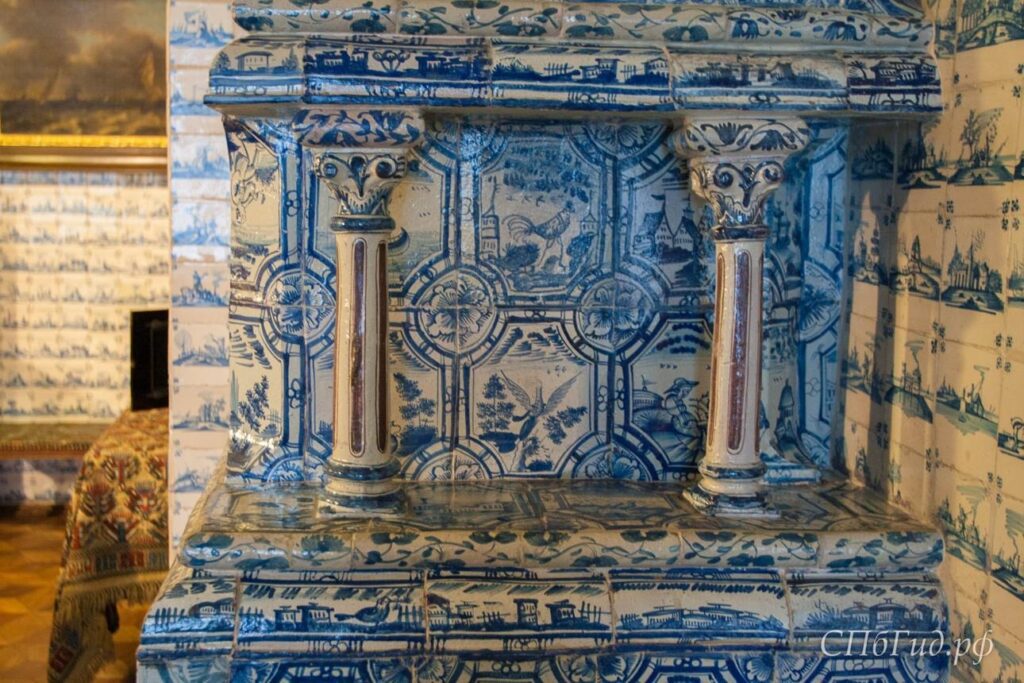
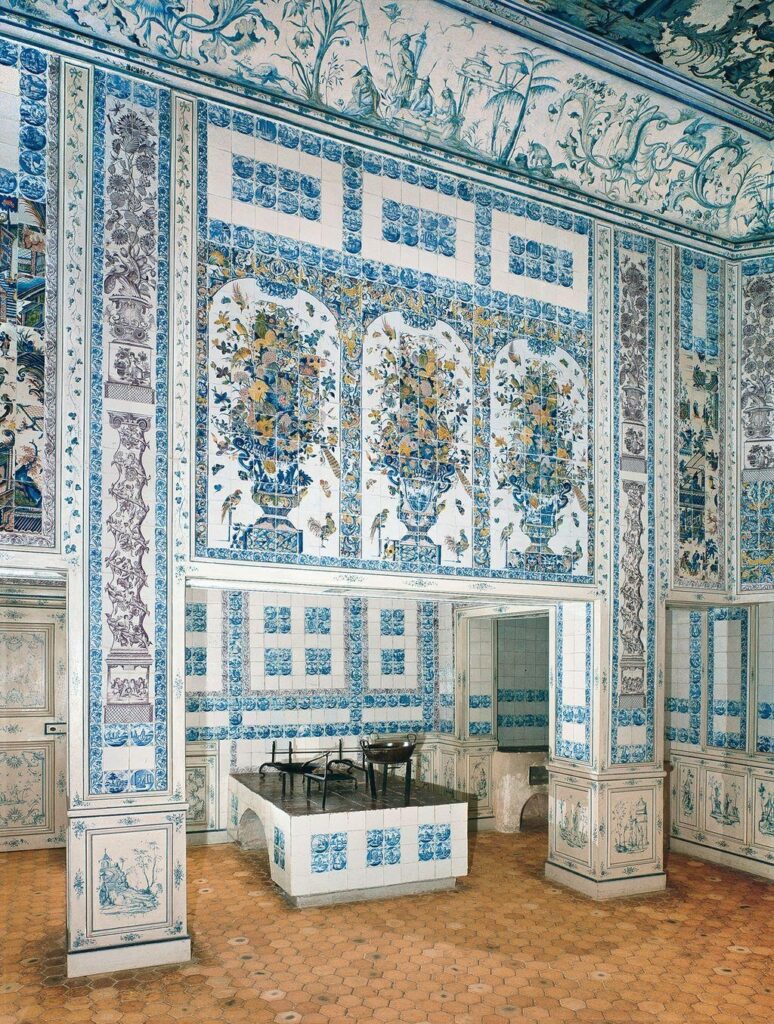
Delft tiles became an important export product in the 17th and 18th centuries. They found their way to the elite and were used in castles, palaces and mansions.
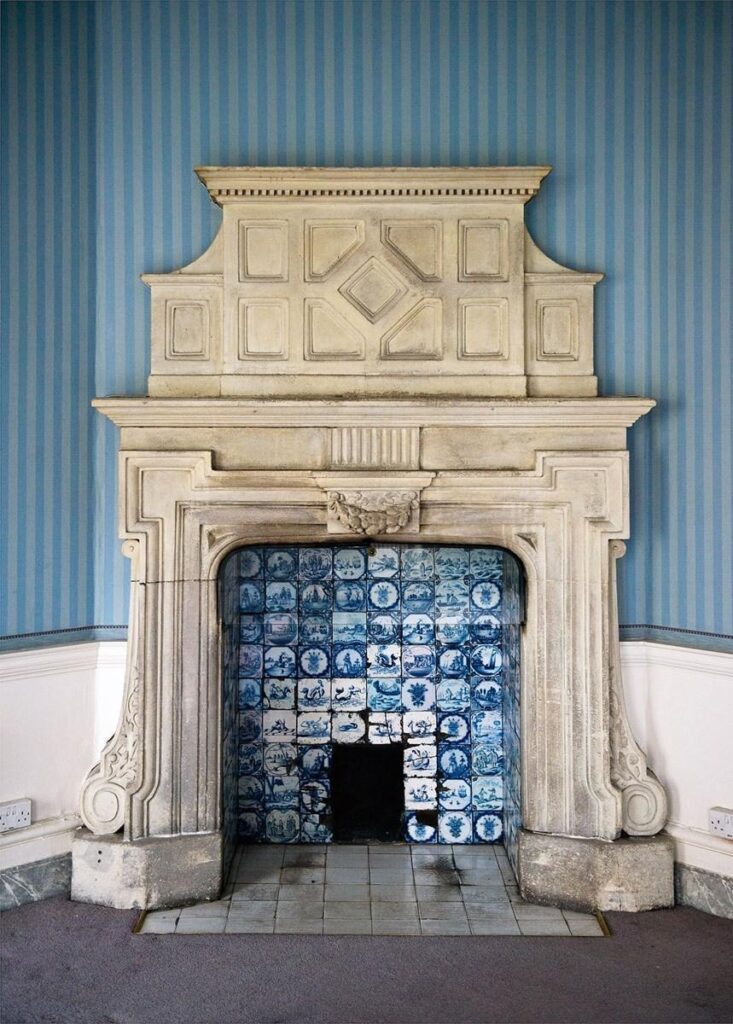
Famous palaces and buildings with Delft/Dutch antique tiles
🇷🇺 Russia
👉 Russia has been one of the main export destinations
🇩🇪 Germany
🇫🇷 France
🇬🇧 United Kingdom
🇩🇰 Denmark
🇳🇱 Netherlands
🇧🇪 Belgium
🇵🇹 Portugal (influence + comparison with azulejos)
🇪🇸 Spain
🇺🇸 United States (collected, not originally posted)
🌍 Other known locations / collections
This presence shows that Delft tiles were valued as a luxury and refined product, and were part of an international elite culture.
Museums and lasting appreciation
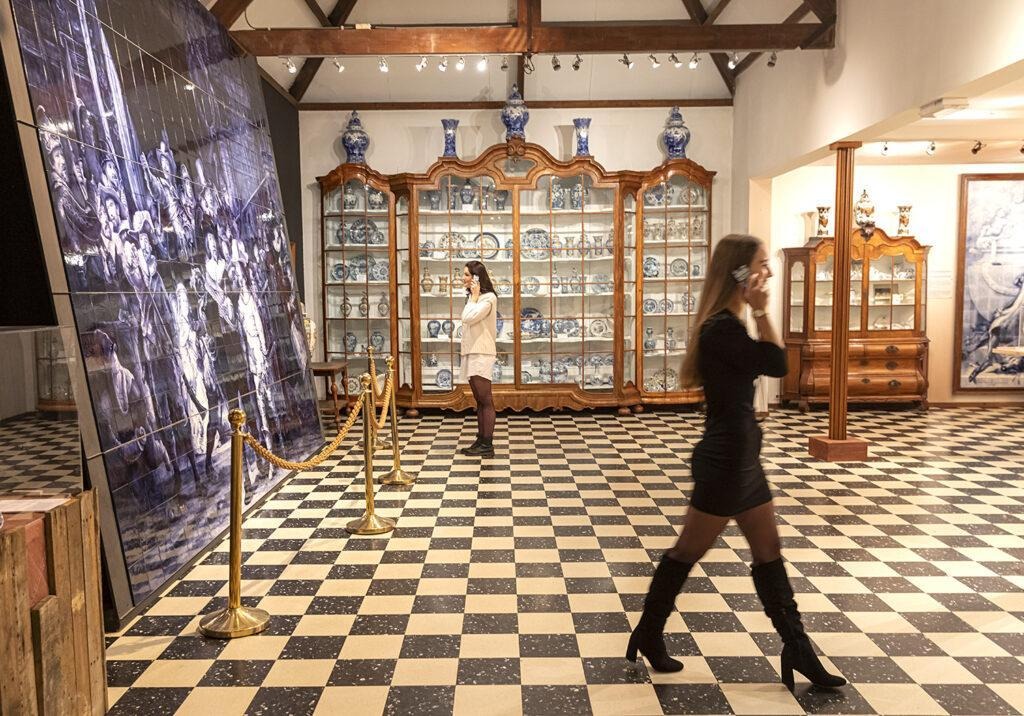
Today, Delft tiles can be seen in museums and collections. At the Dutch Tile Museum in Otterlo, the history and diversity of these tiles is presented in detail, Here it becomes clear that the tile has been given a place within art and cultural history.
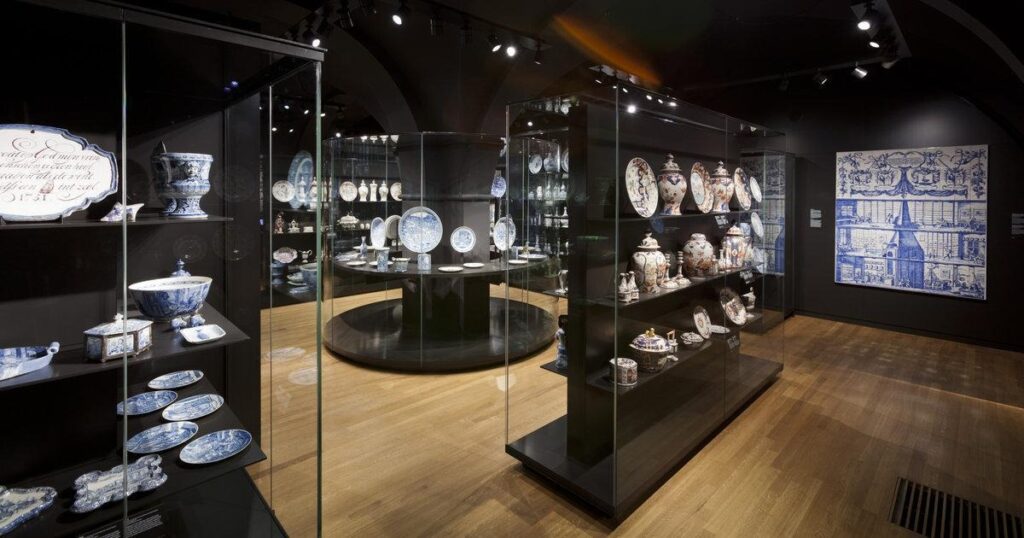
Delft tiles can also be seen here in leading museums worldwide, including the one in Amsterdam, the Victoria and Albert Museum in London and the Metropolitan Museum of Art in New York. This presence underlines the continued significance of the tile within international art and cultural history. Below is a small selection.
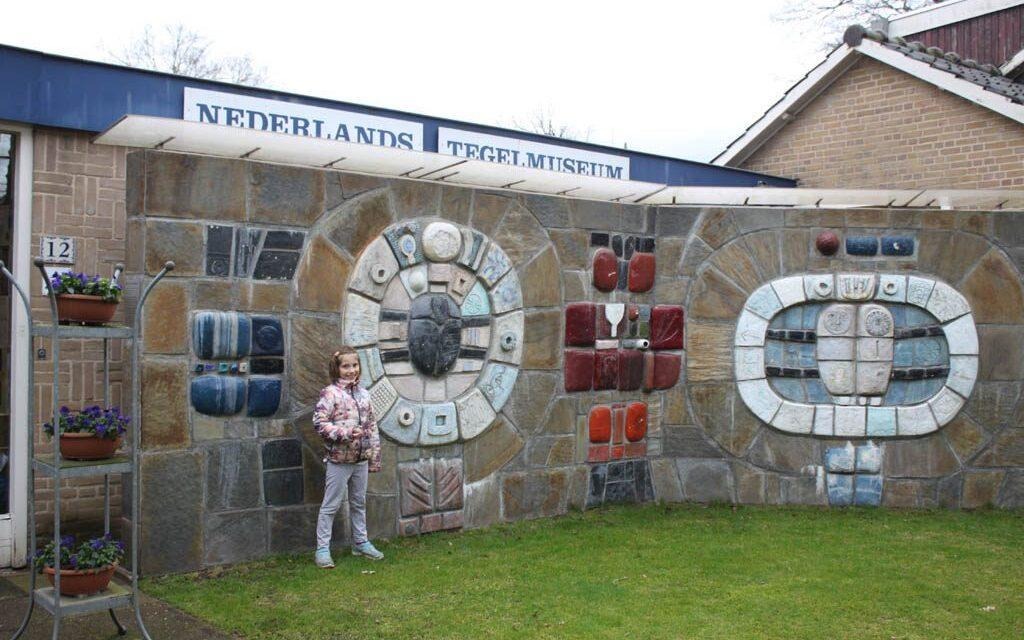
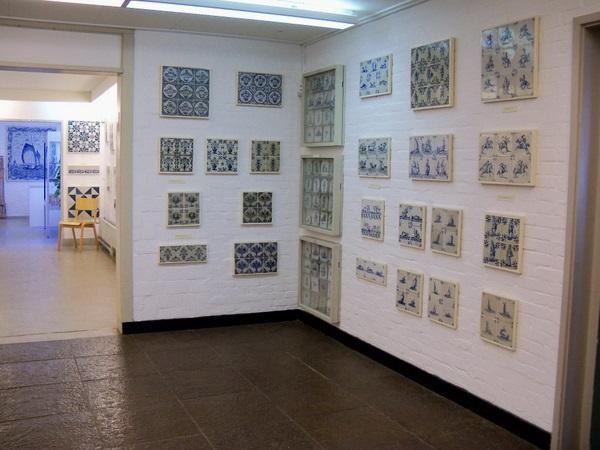
largest collection of Dutch tiles
🏛️ Rijksmuseum
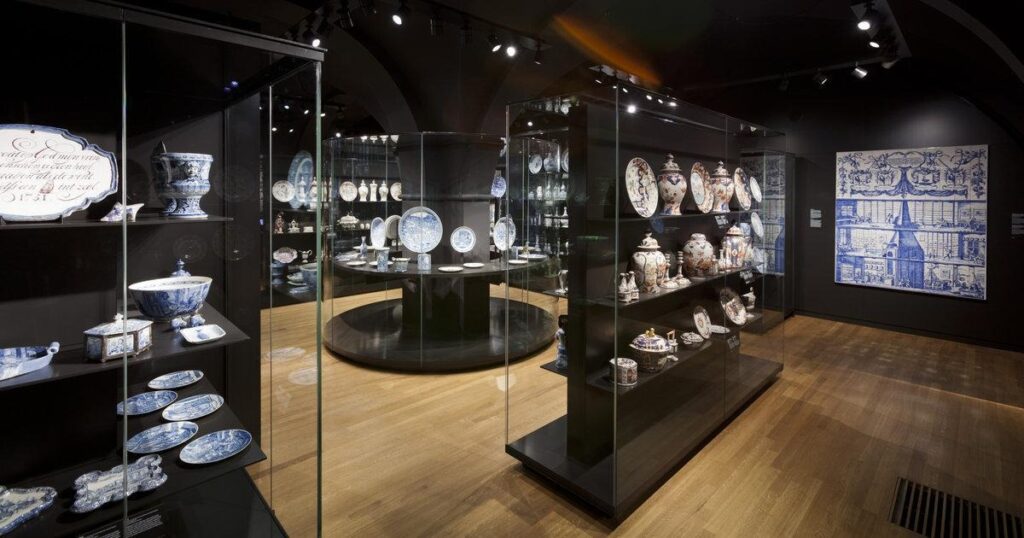
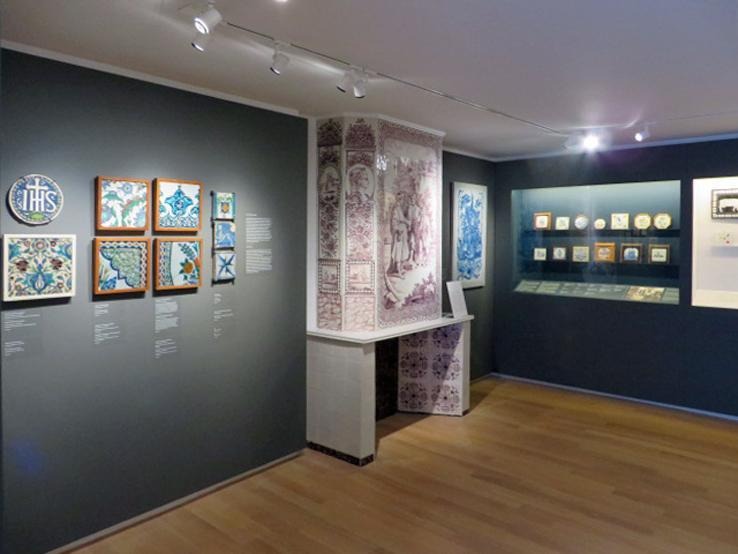
🏛️ Museum Prinsenhof Delft
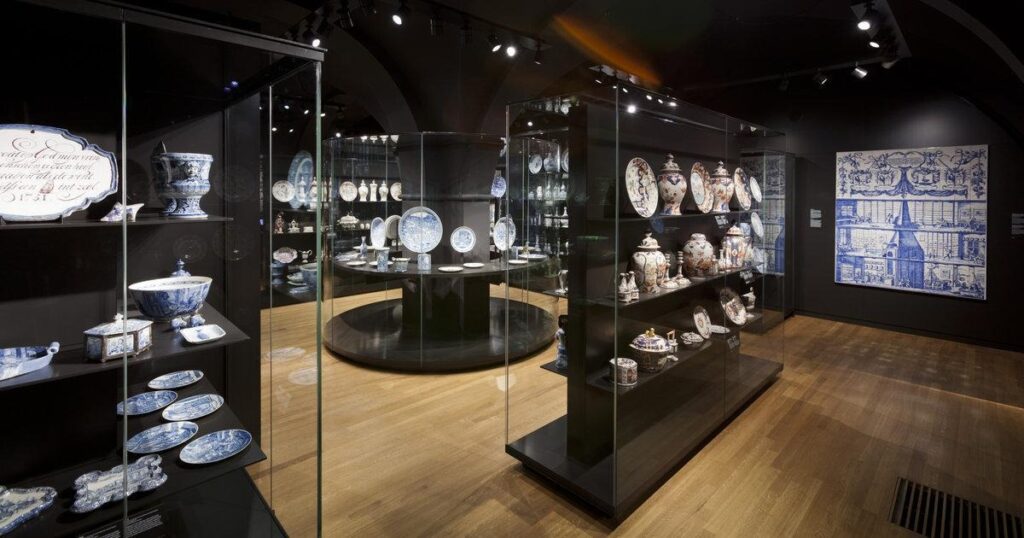
🏛️ Art Museum The Hague
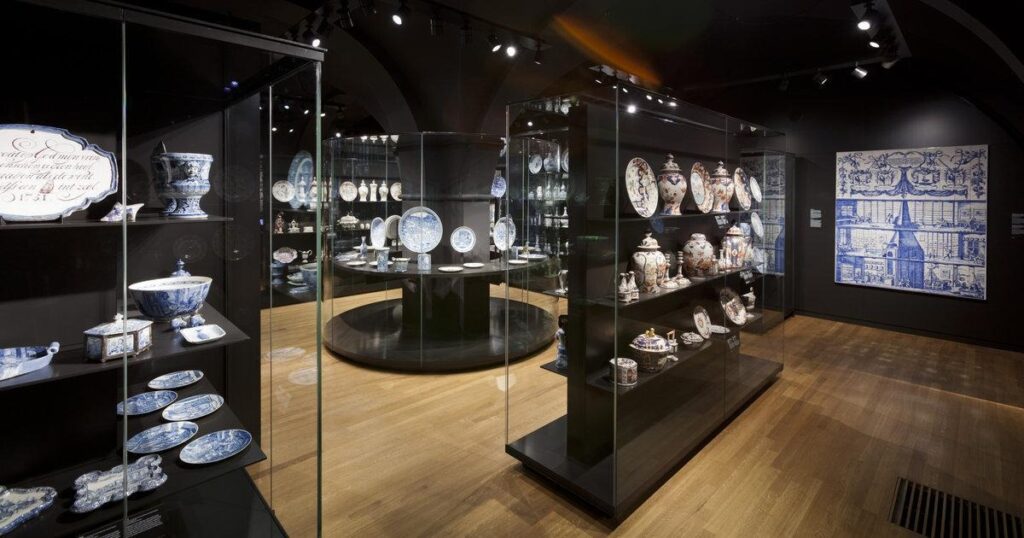
🇬🇧 United Kingdom (very important for international status)
🏛️ Victoria and Albert Museum
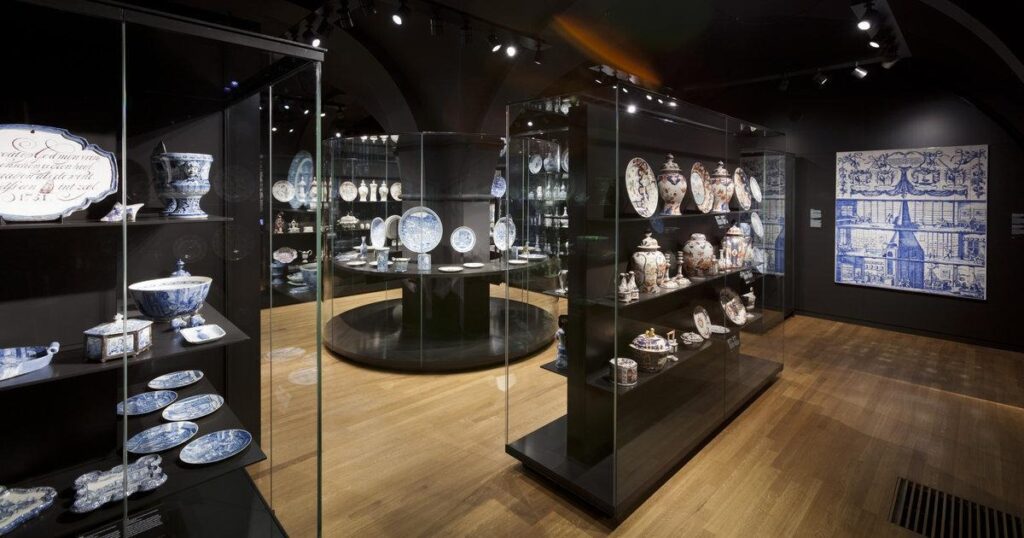
🏛️ British Museum
🇫🇷 France
🏛️ Musée de Cluny
🏛️ Musée des Arts Décoratifs
🇩🇪 Germany
🏛️ Museum für Kunst und Gewerbe Hamburg
🏛️ Bayerisches Nationalmuseum
🇺🇸 United States (important for your market)
🏛️ Metropolitan Museum of Art
6
🏛️ Philadelphia Museum of Art
🏛️ Museum of Fine Arts Boston
🇷🇺 Russia
🏛️ Hermitage Museum
6
.
From use to collectible and interior application
Delft tiles are collected today for their combination of craft, history and recognizable imagery. They are a tangible connection to the 17th century.
In addition, they are used in interiors. In kitchens and fireplaces, they bring tranquility and character. The repetition of the format provides cohesion, while the variation in motif makes the surface lively.
Even as individual objects, framed for example, they retain their beauty and power.
For further depth, see also our other blogs:
Conclusion
The Delft tile is the result of an international development in which influences from the Far East, Italy and Antwerp converged in the Netherlands. Within the potteries, a sophisticated production emerged in which designers, painters and craftsmen worked together.
The influence of printmaking, the development of iconic motifs such as the Hoorn tulip and the Rotterdam sea creatures, and the spread to international palaces and castles make the Delft tile a special object.
Today the Delft tile is valued as a refined collector’s item, as an understated and stylish part of the interior and as a tangible carrier of a rich and aristocratic cultural-historical heritage. Each tile brings together an interplay of international influences, craftsmanship and a visual language rooted in commerce, art and imagination.
What once began as a functional element within the household has developed into an object in which history, aesthetics and craftsmanship meet. The presence of Delft tiles in palaces, castles and prominent collections underlines their enduring significance and their place within European cultural history.
In contemporary interiors, they retain this power. Whether they are used in a fireplace, incorporated into a kitchen or presented as an independent object, Delft tiles bring a form of tranquility and character that cannot be replaced. They connect the past with the present and give space to a way of seeing in which detail, repetition and refinement come together.
Thus, the Delft tile remains not only an object to own, but an object to understand and appreciate – a lasting expression of a culture in which art, commerce and craft are inextricably linked.