

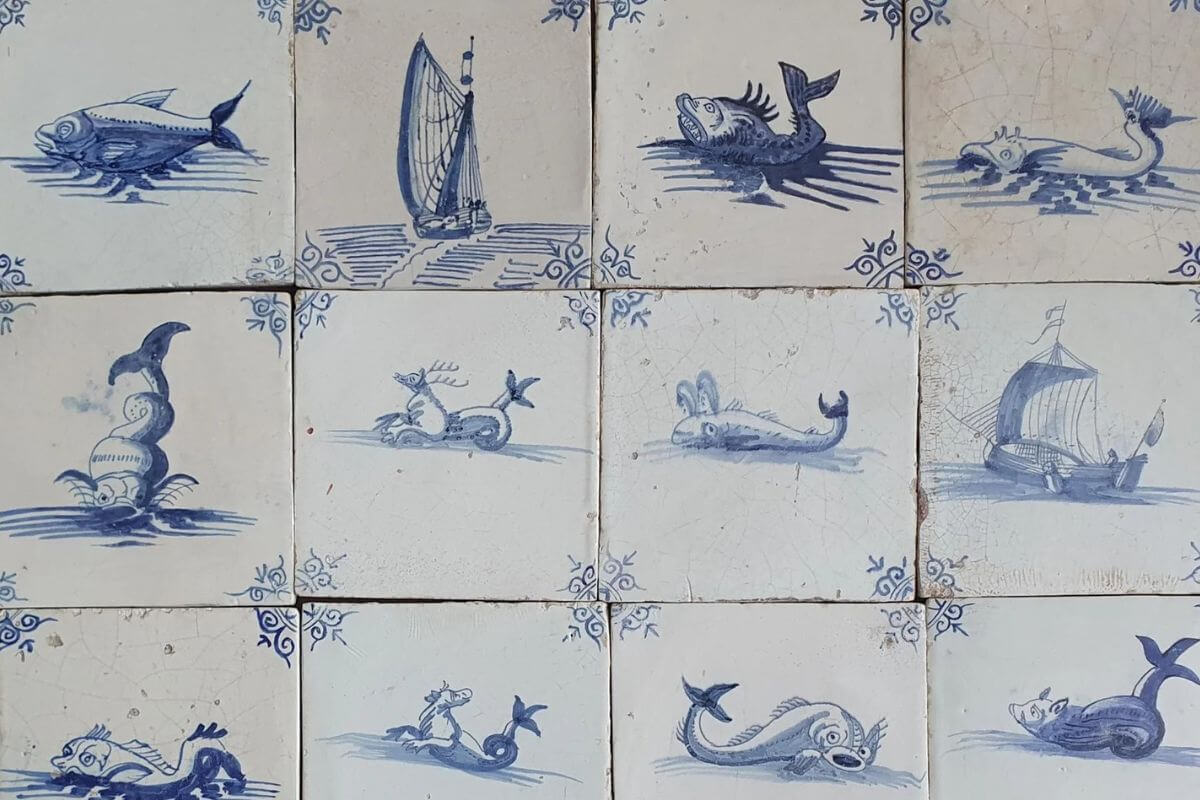
An antique tile carries history, character and artistic value. A
reproduction may imitate its appearance, but it can never recreate its
past.
Dutch wall tiles from the 17th, 18th and 19th centuries are remarkable
examples of traditional craftsmanship. Made and decorated by hand, they
reflect the artistic styles, techniques and everyday life of their time.
From ships, animals and landscapes to flowers, biblical scenes and
portraits, the variety of subjects is extraordinary.
Today, many historical designs are reproduced. Some modern tiles are
easily recognised, while others are deliberately made to resemble
centuries-old examples.
So what distinguishes a genuine antique tile from a reproduction?
One of the most revealing characteristics of an antique tile is its
painting.
Historical tile painters developed individual techniques, visible in
their brushwork, shading, composition and interpretation of a subject.
Even when working from the same design, subtle differences appeared
naturally. A confident brushstroke, an expressive detail or a slight
variation in the composition gives each tile its individual character.
Modern reproductions can sometimes appear more rigid, mechanical or
lacking in expression.
Although reproductions may also be hand-painted, the historical accuracy
and quality of the execution often reveal the difference.
Many antique Dutch tiles were covered with a traditional tin glaze,
producing their characteristic opaque white surface.
Original examples frequently display delicate variations in colour,
texture and sheen. Small imperfections resulting from the firing process
contribute to their individuality.
Modern reproductions often have a more uniform surface, although some
are deliberately given artificial crazing, discolouration or signs of
wear.
Such features alone do not establish age. The glaze must be considered
alongside the painting, clay body and manufacturing techniques.
The clay body provides valuable evidence of how and when a tile was
made.
Depending on the production centre and period, antique Dutch tiles may
vary in thickness, clay colour, texture and finish.
Their backs can reveal traditional manufacturing methods, occasionally
accompanied by traces of old mortar.
Many early examples also have small nail holes associated with the
original forming process.
However, these characteristics can be imitated. Authenticity is
established through the combination of features rather than any single
detail.
Corner decorations are particularly useful when identifying and dating
Dutch tiles.
Traditional motifs such as oxheads (ossenkoppen), fleur-de-lis corners,
carnation corners and other ornamental patterns developed and changed
over time.
The relationship between the central subject, corner decoration,
painting style, colour and dimensions can provide important clues about
a tile’s origins.
A reproduction may copy an individual historical element accurately, yet
inconsistencies in the overall design can reveal its modern manufacture.
Perhaps the most striking difference is something that cannot be
measured: atmosphere.
An original antique tile possesses warmth, individuality and a natural
sense of movement. Its brushwork, glaze and subtle imperfections create
a harmony that is difficult to reproduce.
It has survived centuries, witnessing generations of everyday life.
An antique tile has a story to tell.
A modern reproduction may carry exactly the same image, yet often
appears flatter, lifeless and lacking in atmosphere.
It reproduces the design, but not the experience, sensitivity or
historical presence of the original.
Much like an original painting compared with a copy, the subject may be
identical, but the artistic presence is fundamentally different.
A reproduction can copy the image, but never the soul or history of an
antique tile.
To an inexperienced buyer, a reproduction may appear convincing.
For an experienced collector, art enthusiast or antique dealer, however,
the differences are often immediately apparent.
Brushwork, proportions, glaze, colour and the overall character of a
tile frequently reveal its origins at first glance.
What may look like an authentic historical object to one person can be
readily identified as a modern reproduction by a knowledgeable observer.
Exceptionally convincing examples may still require closer examination,
but expertise makes a considerable difference.
To the trained eye, authenticity is often recognisable immediately.
An original antique tile is more than a decorative object. It is a
genuine historical artefact with established appeal among collectors.
Authentic Dutch tiles from the 17th, 18th and 19th centuries cannot be
recreated. Their historical production is finite, and particularly
desirable examples are increasingly difficult to find.
Rare subjects, exceptional painting, good condition and historical
significance all contribute to their collectability.
These qualities make carefully selected antique tiles attractive not
only for their beauty but also as potential long-term investments.
Well-chosen examples may preserve their value and appreciate over time,
although future returns cannot be guaranteed.
Investing in antique tiles means investing in authenticity,
craftsmanship and cultural heritage.
A modern reproduction cannot offer the same historical provenance or the
intrinsic collectability of a genuine centuries-old object.
Not every reproduction is a forgery.
When a modern tile is clearly identified and sold as a reproduction, its
nature is transparent.
The problem arises when a newly manufactured tile is artificially aged
and presented as a genuine 17th- or 18th-century example.
Artificial wear, simulated age marks, deliberately distressed surfaces
and altered backs can all be used to create a misleading impression of
authenticity.
This makes specialist knowledge of historical materials, painting
techniques and production methods particularly important.
Whether displayed individually, collected as historical works of art or
incorporated into an interior, they bring a sense of authenticity and
atmosphere that goes beyond decoration.
An accurate description and honest identification are essential when
purchasing antique tiles.
An original Dutch tile offers something that modern manufacture cannot
truly reproduce.
Its appeal lies in the combination of artistic individuality,
traditional craftsmanship, historical significance and natural beauty.
The subtle irregularities of hand-painted decoration, the depth of an
old tin glaze and the distinctive character developed through centuries
give antique tiles their unmistakable presence.An accurate description and honest identification are essential when
purchasing antique tiles.
Each genuine tile represents a surviving fragment of Dutch artistic and
cultural history.
A genuine antique tile is far more than a decorated piece of pottery.
It is an original work of craftsmanship with its own identity, artistic
expression and place in history.
A reproduction may imitate its subject, colours and decorative details,
but it cannot recreate the centuries that shaped the original.
An antique tile has a past, a soul and a future.
True history cannot be reproduced.
Ausema.eu — Specialists in Authentic Dutch Wall Tiles from the 17th,
18th and 19th Centuries.